Nietzsche's Simulacra
10 Sessions, 15 June - 17 August 2027
Tuesdays
6pm - 8pm
About
Nietzsche’s philosophy undoes one of the oldest assumptions of Western thought: that behind appearances there must be a more fundamental reality against which these appearances can be judged. From Plato and Christianity to Freudian psychoanalysis and contemporary conspiratorial thinking, Western thought has repeatedly searched for origins, identities and hidden truths concealed beneath the visible world. Nietzsche asks what becomes of thought when there is no final reality waiting behind the curtain.
This course approaches Nietzsche through the figure of the simulacrum: the copy, image, mask or sign that can no longer be secured by an original. For Nietzsche, phenomena do not conceal meanings that our interpretation must uncover. A phenomenon acquires its sense through the forces that seize it, use it and transform it. The same gesture, institution, belief or identity can acquire radically different meanings as different forces take possession of it. Interpretation does not lead us towards a pure origin, because what we encounter is already interpreted, already contested, already caught within a history of appropriations.
This changes the status of appearances themselves. Nietzsche is fascinated by the strange capacity of masks, performances, names and beliefs to become real through repetition. Someone repeatedly playing a role may eventually become indistinguishable from that role; an image imposed upon a person, institution or value may gradually acquire the force of an essence. Reputation, appearance and belief can become attached so closely to things that the distinction between what something “really is” and what it is taken to be begins to break down. Reality here is neither simply discovered nor arbitrarily invented. It is produced through struggles over interpretation, repetition and belief.
The simulacrum therefore opens Nietzsche onto problems that have become particularly vital today. Digital identities are constructed through images and repetitions that may come to shape the people they supposedly represent. Political narratives can generate the realities they claim just to describe. Financial models, rankings, algorithms and predictive systems intervene in the worlds they measure. Synthetic images can circulate without any original event behind them, and conspiracy theories treat every visible fact as the sign of another hidden reality. In each case, the old distinction between representation and reality becomes unstable because representations themselves acquire the power to produce effects, behaviours and forms of life.
Nietzsche’s critique of the self belongs to the same problem. Masks and disguises become philosophically important because there may be no final face behind them. A new force often enters the world by borrowing the language, values and appearance of forces already established there, gradually altering the meaning of the mask it inhabits.
This is why Nietzsche treats philosophy as an art of interpretation and evaluation. The disappearance of an ultimate reality or an ultimate truth does not make every interpretation equivalent. Nietzsche asks what forces are expressed through an interpretation, what forms of life it sustains, what it makes possible, and what it prevents from emerging. Truth itself becomes inseparable from questions of sense, value and power.
Through Nietzsche’s writings on truth, metaphor, masks, genealogy, perspectivism, the self and eternal return, the course will explore a world in which originals become difficult to locate. The simulacrum allows us to connect Nietzsche’s philosophy to a contemporary culture in which images, models and narratives participate in producing the realities in which we live.
What will we cover?
-
Readings from Nietzsche alongside influential twentieth-century readers such as Michel Foucault, Gilles Deleuze and Pierre Klossowski.
-
How masks, repetition, performance and interpretation can become creative tools for thinking differently about the self, culture and contemporary forms of simulation, from social media to AI-generated images.
-
How to move from critique to creation: developing new perspectives, values and ways of seeing rather than just exposing what is false or hidden.
Requirements
This course is open to anyone interested in Nietzsche and theories of simulacrum, and assumes no prior knowledge.
Teacher
Dr. Daniel Weizman
Price
£260
Location
Fitzrovia, London
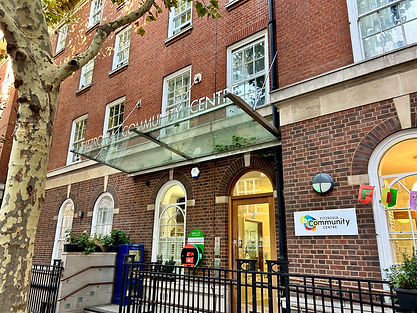
We are located at Fitzrovia Community Centre,
2 Foley Street, London W1W 6DL
Our classes take place in a modern meeting room, just a short walk from Goodge Street and Oxford Circus Underground stations.
The location is fully accessible, with step-free access and facilities to accommodate all mobility needs.