Spinoza: Practical Philosophy
12 Sessions, 16 March 2027 - 1 June 2027
Tuesdays
6:00pm - 8:00pm
About
Baruch Spinoza argued that philosophy is a practice of living: a way through which human beings shape their existence. Spinozist thought demands movement; it touches the body before it settles into reflective consciousness. For nineteenth- and twentieth-century philosophers, Spinoza’s philosophy is practical because it asks not what human beings ought to be, but what bodies and minds are capable of doing. It teaches us how to increase our power to act (conatus) and transform passive, diminishing emotions into forms of joyful activity that expand the limits of our freedom in the present.
This course explores the modern Continental legacy of Spinoza and the extraordinary impact of his anti-Cartesian thought on philosophy. Far from belonging only to the history of rationalism, Spinoza became a decisive figure for modern thinkers searching for new ways of understanding desire, power, freedom, and collective life.
Nietzsche regarded Spinoza as his great philosophical precursor. In 1881 he wrote enthusiastically that he had finally found a thinker who anticipated many of his own positions. Spinoza, for Nietzsche, was the first philosopher to reject the central metaphysical assumptions of the Western tradition: free will, teleology, and the idea of a moral order grounded in reward and punishment.
In post-war France, Martial Guéroult offered a radically new interpretation of Spinoza that influenced generations of readers, including Gilles Deleuze and Michel Foucault. Against traditional readings that treated Spinoza as a thinker of abstract unity, Gueroult developed a structural approach that foregrounded the complexity and autonomy of the Spinozist attributes themselves. His work opened the way for a reading of Spinoza centred on dynamic relations, powers, and forms of expression.
Gilles Deleuze, perhaps the most influential modern reader of Spinoza, argued that Spinoza’s philosophy is practical because it is fundamentally immanent, rejecting all external hierarchy and judgement in favour of relations, capacities, and powers of action. For Deleuze, the Ethics becomes an ethology: a mapping of what bodies can do in their encounters with the world. Philosophy thereby turns into a guide for liberating desire from sadness and servitude.
What will we cover?
-
Cartesian science and Spinozist expressionism: how Spinoza develops an alternative to Descartes’ dualism and model of subjectivity
-
Structuralist readings of Spinoza and their influence on twentieth-century philosophy and affect theory
-
Close readings from Spinoza’s Ethics and Theologico-Political Treatise
Requirements
No prior background is required. The course is open to anyone with an interest in contemporary philosophy.
Teacher
Dr. Daniel Weizman
Price
£300
Location
Fitzrovia, London
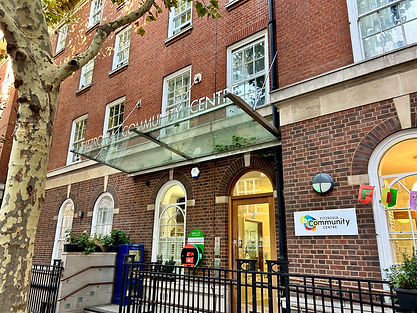
We are located at Fitzrovia Community Centre,
2 Foley Street, London W1W 6DL
Our classes take place in a modern meeting room, just a short walk from Goodge Street and Oxford Circus Underground stations.
The location is fully accessible, with step-free access and facilities to accommodate all mobility needs.